
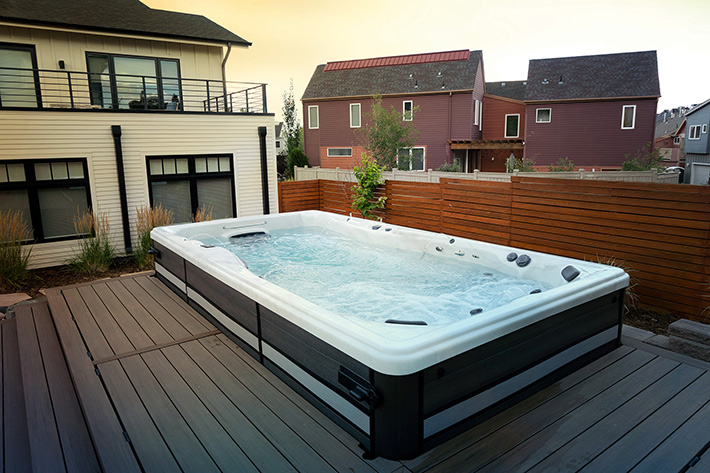
People tend to shop for a hot tub the fun way. Seats, jets, lighting, lounger or no lounger. Swim spa shoppers do the same thing, just with more talk about current strength and workout space. Then reality shows up in the least glamorous form: electricity.
We want to make sure your hot tub installation goes as smoothly as possible with some planning tips.
If you plan the electrical work early, installation day goes smoothly. If you skip it, you can end up with a hot tub sitting on a pad while everyone waits for an electrician, a permit, or a panel upgrade. In Michigan, that can turn into weeks if you hit a busy season.
This article is meant to take the mystery out of it. Not to make you an electrician, just to help you ask the right questions before anyone schedules a delivery.
What Does Your Spa Actually Need?
Hot tubs and swim spas do not all run on the same setup. Some hot tubs are 120V plug-and-play models. Many mid-size and larger hot tubs are 240V. Swim spas are often 240V and can require more amperage depending on the pumps and heater load.
Here’s the part that surprises people: you can’t assume the requirements based on size alone. Two tubs that look similar on a showroom floor can have different electrical needs once you factor in how many pumps they run and whether they can heat while the jets are running.
The easiest way to avoid guessing is to request the model’s electrical specification sheet early. That document tells an electrician what to plan for and whether your home is likely to need an upgrade.
What “amperage” means in real life
Amperage is basically the size of the “lane” your spa uses. Larger tubs and swim spas may call for 40, 50, or 60 amps. Some swim spas can go higher. The exact number matters because it determines wire and breaker sizes, and whether your existing panel can handle the additional load.
A home can have plenty of open breaker spaces and still be short on capacity. If your panel is already working hard with air conditioning, electric range, dryer, and other loads, adding a spa can push things over the edge. That’s when an electrician may recommend a service upgrade or load management.
It’s better to hear that at the start of the project than after the pad is poured.
Most hot tubs and swim spas require GFCI protection. GFCI is the safety device designed to cut power quickly if there’s a ground fault. Water and electricity do not forgive mistakes, so this is one area where the rules are strict for good reason.
In practice, you’ll usually see GFCI handled either at the breaker in the main panel or through a spa disconnect that includes a GFCI breaker. Your electrician will choose the correct approach for the model and the layout.
If you’ve ever had a bathroom outlet trip and thought, “How annoying,” this is the same basic idea, just applied to a much bigger load.
Where The Disconnect Goes and Why It Matters
A spa disconnect is the shutoff that lets you cut power to the hot tub without running inside to the main panel. It’s there for service and safety.
Placement matters. Too close and it can violate clearance rules. Too far, and it becomes a pain for technicians. You also want it positioned so it’s accessible in winter when snow piles up, and everything looks different than it did in July.
This is one of those planning details that’s worth a quick walk outside with the electrician. Stand where the tub will be and look at the likely conduit path. You’re trying to avoid weird routing, trip hazards, and long runs that add cost.
Distance is money in electrical work. A tub close to the panel, on the same side of the house, is usually easier. A tub on the far end of the yard can mean a longer conduit run, more labor, and sometimes trenching.
A few common “gotchas” homeowners don’t see at first:
● The shortest path crosses a walkway or a driveway.
● The ideal route runs straight through a finished basement ceiling.
● The panel is full or located in a spot that makes clean routing difficult.
● The tub location is perfect for relaxing, but awkward for conduit and service access.
None of these problems is a deal-breaker. They just changed the plan.
Permits and scheduling: don’t leave this to the last week
Electrical work for a hot tub or swim spa often involves permits and inspections. That is normal. It also means you should schedule the electrician early enough that the work can be completed before delivery, or at least before you want to fill the tub.
If you’re aiming for a winter installation, plan even earlier. Michigan weather can make outdoor electrical work slower, and the calendar fills up fast when storms roll through and everyone remembers they’ve been meaning to buy a generator.
If you want a simple process that tends to work:
1. Choose the model.
2. Get the electrical requirements in writing.
3. Have an electrician review your panel and the route to the install location.
4. Confirm whether any upgrades are needed.
5. Schedule electrical work before delivery.
That sequence prevents most delays, and it keeps you from paying rush premiums.
Premium Hot Tubs and Expert Installation Planning
If you’re shopping for a hot tub or swim spa, The Hot Tub Store in Rochester Hills and Macomb can help you choose the right model and make sure your installation plan is ready before delivery day.
We carry premium Master Spas hot tubs and swim spas designed to elevate your lifestyle, support relaxation, and promote overall wellness.